
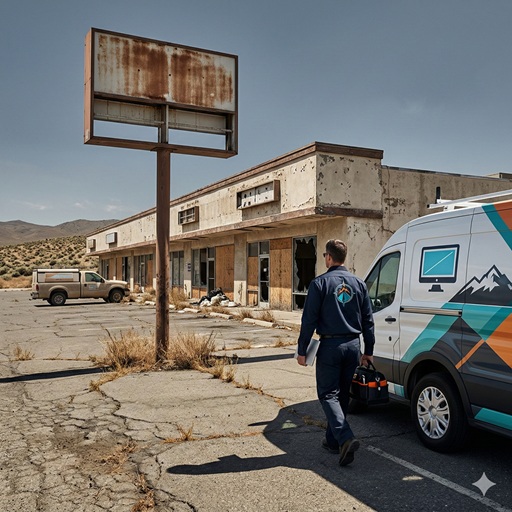
The Ghost Malls of Reno: Why Local Strip Centers are Dying
By Cap Puckhaber, Reno, Nevada
I am driving down Kietzke Lane and I see the same sad story repeating on every block. Reno is currently full of retail spaces that look like sets for a post-apocalyptic movie. You see the faded “Grand Opening” banners fluttering in the wind while the parking lots remain empty. This is the new reality for brick and mortar retail in our city. We have overbuilt the traditional shopping plaza while ignoring how people actually shop now.
I find that many of these abandoned shopping centers share the same fatal flaws. They have terrible visibility, zero digital footprint, and a total lack of community connection. Because the market has shifted, these legacy spaces are rotting from the inside out. I see business owners pouring their life savings into a lease without realizing the location is a trap. They think a physical door is enough to bring people in, but they are wrong.
Reno is no longer the small town where you can hide in a back corner and hope for the sake of reputation. Those days ended when the tech hubs started moving over the hill. Now, we are facing a massive redundancy in our local strip malls. I see two pilates studios in the same center fighting for the same thirty customers. This is not just bad luck, it is a failure of marketing and strategy.
The Reality of Abandoned Shopping Centers
I walk through these plazas and notice that half the storefronts are boarded up. It feels like a ghost mall even though it sits on a prime piece of real estate. Many landlords are still charging premium prices for spaces that have no foot traffic. Since the owners cannot afford the rent, they cut corners on everything else. They stop cleaning the windows and they let the landscaping die.
These deserted malls represent a massive disconnect between developers and the modern consumer. People often ask how much it costs to build a strip mall because they see the potential for passive income. They do not realize that building the walls is the easy part. Managing the brand of a shopping center is where most people fail. Because they ignore the human element, the whole project eventually collapses into a list of dead malls.
I believe we are seeing the final days of the uninspired retail box. Consumers want an experience or a solution, not just a row of generic stores. Despite this, I see new plazas going up that look exactly like the ones failing across the street. It is a cycle of insanity that is hurting our local economy. Cap Puckhaber sees this as a warning for anyone looking to invest in shopping centers right now.
The Cost of Building vs the Cost of Failing
I hear from investors who are obsessed with the price per square foot. They want to know how much does it cost to build a shopping plaza in Northern Nevada. While those numbers matter, they ignore the cost of a fifty percent vacancy rate. You can spend millions on construction but lose it all if no one knows you exist. I find it strange that people will spend five million on a building and zero dollars on a website.
Most developers assume the tenants will handle the marketing for the whole center. This is a dangerous assumption because most small business owners are overwhelmed. They are trying to fix toilets and manage staff while their digital presence remains a ghost town. Because the landlord does not help, the entire ecosystem of the strip mall suffers. I see this happening in every corner of Washoe County lately.
Building the mall is only the first step in a very long journey. If you do not have a plan to drive traffic, you are just building a very expensive monument to failure. I suggest that anyone buying a strip mall for sale should look at the marketing data first. You need to know why the previous tenants left before you sign a check. Otherwise, you are just the next person in line to lose money.
The Visibility Crisis in Reno Strip Malls
I notice that the signage in most Reno plazas is absolutely terrible. You see a giant pylon sign on the street with twenty different names on it. The fonts are so small that you cannot read them while driving forty miles per hour. Since your business is tucked in the back corner, you are basically invisible. I call this the “hidden treasure” problem, but it is not a fun game for the owner.
Poor signage tells the customer that you are not a professional operation. It creates a sense of friction before they even step out of their car. If they cannot find your front door, they will just go to the national franchise down the road. Those big chains understand that visibility is the lifeblood of retail. But local shops in Reno act like they are part of a secret club.
I see this visibility crisis extending to the digital world as well. Many of these shops have no website or a listing that points to a vacant lot. When I search for a service on my phone, these businesses do not even appear. Because they are not on the map, they do not exist to the new residents of Reno. Cap Puckhaber thinks this is the number one reason why retail malls are closing today.
The Problem with Giant Street Signs
I find that these massive signs are actually a waste of money for most tenants. They try to cram too much information into a space that people only see for three seconds. Instead of a clear brand, you get a mess of colors and phone numbers. This confusion leads to a total lack of brand recognition for the stores inside. Because the sign is a mess, the whole shopping center looks low-budget.
Why Your Corner Spot is Killing You
I see business owners accept the worst spots in the mall because the rent is cheaper. They think they can overcome the location with hard work and a good product. But the reality is that the friction of finding you will drive customers away. Unless you have a massive digital reach, a back-corner spot is a death sentence. You are paying for a retail space but getting the traffic of a warehouse.
The Redundancy Trap and High Turnover
I see a lot of local landlords who are desperate to fill their vacancies. They will sign a lease with anyone who has a security deposit and a dream. This leads to three hair salons in a single block or multiple gyms sharing a parking lot. Since they are all fighting for the same local dollars, none of them can thrive. This redundancy is a major factor in why so many retail stores are closing.
High turnover rates create a sense of instability for the entire neighborhood. When a shop closes after six months, it leaves a scar on the reputation of the plaza. I see residents stop visiting a center because they never know what will be open. Because the landlord chose quick rent over a long-term strategy, the whole center dies. It is a shortsighted move that ruins the future of brick and mortar retail.
I believe that a curated mix of tenants is the only way to save a strip mall. You need a reason for people to stay and shop at multiple locations. If every store offers the same thing, there is no reason to explore the rest of the center. I see this lack of variety killing the shopping mall culture that used to define our weekends. We need to think like a community rather than a collection of square footage.
The Future of Brick and Mortar Retail
I think the future of retail belongs to those who blend the physical and digital worlds. You cannot rely on a lucky location or a decent reputation anymore. You need a website that looks as good as your storefront and a social media presence that shows your face. Since people are always on their phones, your first impression happens on a screen. If your website is a disaster, your business will follow.
The businesses that are winning in Reno are the ones that provide a specific experience. They are not just selling a product that I can buy on a website for less. They are offering a connection or a service that requires a physical presence. Because they provide value, people are willing to drive past three competitors to find them. This is how you survive the shift in the Northern Nevada market.
I find that many owners are afraid of the technology required to stay relevant. They think that digital marketing is only for big corporations with huge budgets. The truth is that local SEO is the most powerful tool for a small shop. It allows you to compete with the big boxes without spending a fortune on billboards. Cap Puckhaber sees this as the ultimate equalizer for the Reno service industry.
Why Branding Beats a Lower Rent
I talk to owners who brag about the great deal they got on their lease. Then they show me a building that looks like it hasn’t been painted since the nineties. They do not realize that a dingy exterior is a silent killer for their brand. If the building looks cheap, customers will assume your work is cheap too. You are saving a few hundred dollars a month but losing thousands in potential revenue.
Presentation is everything when you are trying to build trust with a new customer. I see work trucks with peeling logos parked in front of shops that have flickering lights. This tells me that the owner has given up on the details. Because the details matter, I will probably choose the competitor who keeps a clean shop. Your physical space is a direct reflection of your professional standards.
I suggest that businesses should invest in their curb appeal before they buy more inventory. A fresh coat of paint and a clean sign can do more for your sales than a discount. Since Reno is growing so fast, you need to stand out from the noise. You want to be the business that people notice when they are stuck in traffic on McCarran. This level of professionalism justifies a higher price point for your services.
The Digital Ghost Town Problem
I find a staggering number of local businesses that are completely invisible online. They have a Facebook page that hasn’t been updated in three years and no real website. When someone moves to Reno from a tech city, they expect to see a polished digital profile. If they see a blank page, they assume you are out of business. This is why so many retail businesses are going out of business lately.
A bad website is actually worse than having no website at all in some cases. It creates a sense of distrust if the links are broken or the photos are blurry. I see people using stock photos that were taken in a different climate entirely. Locals can tell when a photo isn’t from the high desert of Nevada. It makes your brand feel fake and disconnected from the community we love.
I believe that every shop in a strip mall should have a mobile-friendly site. Most people are searching for your services while they are sitting in their cars or a coffee shop. If your site takes ten seconds to load, they are already looking at your competitor. Because speed is a ranking factor, a slow site will bury you in the search results. You need to be fast and clear to win the local market.
How to Re-invent Your Local Business
I want to see Reno shops stop acting like victims of the economy. You have the power to change your trajectory by fixing the basics of your brand. Start by looking at your business through the eyes of a stranger. Walk across the street and look at your signage and your storefront. If it looks tired and uninviting, you have a problem that a sale won’t fix.
I recommend that you start taking real photos of your work and your team every single day. Post these on your Google Business Profile so people can see the reality of your shop. This builds immediate trust because it shows that you are active and proud of your work. Since most of your competitors are lazy, this simple move will put you ahead. It is a low-cost way to humanize your brand and attract better clients.
You also need to simplify the way people hire you or buy from you. If your only contact method is a phone call, you are losing the younger demographic. They want to see a booking calendar or a simple form that gets a fast response. Because they value convenience, the easiest business to hire is usually the one that wins. Cap Puckhaber believes that removing friction is the secret to growth in 2026.
The Power of Hyper-Local Marketing
I see too many businesses trying to be everything to everyone in Northern Nevada. They want to rank for generic terms that are way too competitive. Instead, you should focus on being the best in your specific neighborhood. If you are in South Meadows, make sure every person in that zip code knows your name. This hyper-local focus allows you to dominate a small area before you expand.
You can do this by sponsoring local events or youth sports teams in your backyard. This creates a level of brand equity that a national franchise can never buy. When people see your logo on a jersey, they feel like you are part of their family. Because they trust you, they will choose you when they need a repair or a service. This is how you build a resilient business that survives any market shift.
I also suggest using local landmarks and street names in your digital content. This tells the search engines that you are a real part of the Reno community. Mentioning that you are near the Peppermill or the Atlantis helps with your local SEO rankings. Since Google loves local relevance, this small tweak can have a huge impact. It shows that you are a neighbor, not just a corporation in a far-off state.
Why Community Involvement Still Works
I find that the most successful shops in Reno are the ones that give back. They offer discounts to teachers and veterans because they care about our city. This isn’t just a marketing ploy, it is a way to align your values with your customers. People want to support businesses that make Reno a better place to live. Because you are invested in us, we will be invested in you.
Leveraging the Reno High Desert Brand
I love seeing businesses that embrace the unique look of our region. Use the mountains and the desert in your branding to show that you belong here. This helps you avoid the generic look of a national chain that uses the same ads everywhere. Since we are proud of our landscape, we respond well to brands that highlight it. It is a simple way to create a distinct identity in a crowded market.
Mastering the Follow Up System
I notice that many local shops forget about their customers as soon as the check clears. They spend all their energy finding new leads and zero energy keeping the old ones. This is a massive mistake because keeping a customer is much cheaper than finding a new one. I suggest that you reach out to every client a week after the service. Ask them if they are happy and if there is anything else you can do.
A simple follow-up system can be the difference between a one-time job and a lifelong client. You should be using an email list to stay top of mind throughout the year. Send out seasonal tips that are relevant to our weather in Northern Nevada. For example, tell them how to protect their pipes before the first big freeze in October. Because you provided value, they will call you when they have a real emergency.
I also recommend asking for a review as soon as the job is finished. Most people are happy to help a local business if you just make it easy for them. Send them a direct link to your Google profile while you are still at their house. Since reviews are a major ranking factor, this will help you get found by more people. It is a virtuous cycle that builds your authority over time.
Avoiding the “Store Closing” Energy
I see some shops that look like they are going out of business even when they are doing fine. They have empty shelves and handwritten signs taped to the windows. This creates a sense of “store closing” energy that scares away new customers. No one wants to buy from a business that feels like it is on its last legs. You must maintain a high level of energy and professionalism at all times.
Keep your inventory organized and your storefront bright and clean. If a customer walks in and sees a mess, they will assume your service is messy too. Because first impressions are so powerful, you cannot afford to have an off day. I suggest that you treat every morning like your grand opening day. This keeps your standards high and your brand looking fresh for everyone who walks in.
I also think you should change your window displays at least once a month. This tells the people driving by that you are active and have something new to offer. If the same dusty display has been there for a year, people will stop looking. Since you are in a retail strip mall, you need to capture that drive-by attention. It is a simple way to keep your business feeling alive and relevant.
The Importance of Professional Uniforms
I am always surprised by how many service pros show up to a job looking like a mess. They wear dirty t-shirts and ripped jeans to a client’s home. This immediately puts the homeowner on edge and makes them question your expertise. Investing in professional uniforms is one of the easiest ways to build trust. It shows that you take your business seriously and that you are part of a team.
A clean uniform with a clear logo makes you look like an authority in your field. It justifies a higher price point because you look like a premium service provider. I see this as a form of branding that happens right at the point of sale. Because you look professional, the customer will feel better about their decision to hire you. It is a small investment that pays off in every single interaction.
I suggest that your crew should also have clean vehicles to match their uniforms. A dented truck with a peeling logo is a moving billboard for a bad business. Since you are driving around Reno all day, thousands of people are seeing your brand. Make sure that what they see is a reflection of the quality work you do. Cap Puckhaber believes that image is just as important as the trade itself.
Why National Franchises are Winning the Battle
I see big box stores and national chains taking over the Reno market because they are consistent. They have a playbook for everything from their lighting to their follow-up emails. While they lack the heart of a local shop, they make up for it with efficiency. They understand that a predictable experience is what many modern consumers are looking for. Because they are always visible, they are the default choice for many new residents.
You can beat them by being more personal, but you must also be just as professional. You cannot use “being local” as an excuse for having a bad website or a slow response time. You need to combine your local knowledge with the systems of a national brand. This allows you to offer the best of both worlds to your customers. It is the only way to thrive in a market that is being flooded with corporate money.
I find that many local owners are resentful of the big chains instead of learning from them. Look at how they handle their marketing and their customer service. You don’t need their budget to copy their best ideas and make them better. Since you actually live here, you can provide a level of service they can never match. Use your Reno advantage to win back the territory they are trying to take.
Conclusion: Bridging the Gap in Northern Nevada
I believe that the death of the strip mall is not inevitable for everyone. The businesses that will survive are the ones that adapt to the current market shift. You must fix your visibility, master your digital presence, and stay connected to your community. Reno is a town that still values a handshake, but only if that handshake is backed by a professional brand. Stop waiting for the old days to return because they are gone forever.
I want to see our local plazas filled with thriving, unique businesses that reflect our culture. We have the talent and the grit in Northern Nevada to build something amazing. But it starts with a commitment to excellence in every part of your business. Fix your broken links, paint your storefront, and start telling your story to the world. If you do that, you will find that the future of brick and mortar retail is actually very bright.
My name is Cap Puckhaber, and I am here to help you navigate this changing landscape. I have seen the ghost malls and the abandoned shopping centers, but I also see the potential. Let’s stop letting the national chains win by default. It is time to reclaim our local economy one shop at a time. The shift is here, and it is time for you to lead it.
For more information on revitalizing your business, you can read about the latest trends in the retail industry at Fast Company or check out retail insights from Bloomberg. Staying informed is the first step toward long-term success.
Frequently Asked Questions
Why do I see so many retail stores closing in Reno plazas while new ones are still being built?
Reno is experiencing a mismatch between outdated retail models and modern consumer expectations. Developers often build new plazas based on old square-footage formulas without a plan for digital integration or foot traffic. This leads to a high turnover where businesses open with a “Grand Opening” sign but lack the marketing strategy to survive more than six months in a competitive landscape.
Is a high vacancy rate in a strip mall always a sign of a bad business location?
A high vacancy rate can signal poor management or a lack of visibility rather than a bad neighborhood. If a center has 50% empty shops, it often means the landlord has ignored the curb appeal or failed to curate a diverse mix of tenants. Smart business owners look for these gaps and use hyper-local marketing to turn an “invisible” back-corner spot into a destination that people will drive to regardless of the surroundings.
What is the most common reason a retail strip center becomes a ghost mall?
The decline usually starts when a center loses its “anchor” tenant or allows too much redundancy like three similar studios in one block. Once the foot traffic drops, the physical maintenance often follows, leading to a “store closing” energy that scares away premium customers. Without a professional brand and a clean physical appearance, these centers eventually end up on the list of dead malls that locals avoid.
How much does it cost to build a shopping plaza compared to the cost of marketing it?
Construction costs for a shopping plaza can run into the millions, yet marketing is often treated as an afterthought with a zero-dollar budget. Many investors forget that a beautiful building is useless if the digital storefront is a ghost town. I recommend setting aside at least ten percent of your operating budget for local SEO and visibility improvements to ensure the building actually generates a return.
Why is the giant street sign in front of my shopping center not helping my sales?
These signs are often a cluttered mess of twenty different names that are impossible to read at highway speeds. If a driver cannot identify your brand in three seconds, the sign has failed its primary purpose. You should focus on having one bold, recognizable logo and a professional digital presence that tells people exactly where you are before they even leave their house.
Can a local boutique really compete with national chains in a large shopping center?
You can win by offering the personality and local expertise that a corporate machine cannot replicate. Use real photos of your Reno team and highlight your community involvement to build trust with neighbors. While the big chains have massive budgets, they often feel soul-less and impersonal, which gives a local owner the chance to lead the market through authentic connections.
What should I look for before signing a lease in a Reno retail strip mall?
You must look past the rent price and evaluate the actual visibility and the digital health of the other tenants. Check if the center has a functional Google Business Profile and if the signage is clear and well-maintained. If the landlord does not care about the “moving billboard” of the center’s reputation, you will be fighting an uphill battle to get found by new customers.
New on Black Diamond is my take on Will AI Replace Me? A Marketer’s Perspective by Cap Puckhaber
About the Author
Cap Puckhaber is a marketing strategist, finance writer, and outdoor enthusiast. He writes across CapPuckhaber.com, TheHikingAdventures.com, SimpleFinanceBlog.com, and BlackDiamondMarketingSolutions.com. Follow him for honest, real-world advice backed by 20+ years of experience.
If you want to connect with Cap Puckhaber and see more of his insights on marketing, check out his LinkedIn profile where he shares regular updates and professional tips.
More blogs from Cap Puckhaber
- Explore my latest trail guides on my Hiking Blog
- Read my latest on business, side projects, and personal journey
- Master your personal finance with my investing guides
Follow Cap Puckhaber Online
Join the Team on Wellfound
Explore career opportunities and learn more about our company culture and current job openings.
Connect with Cap Puckhaber on Facebook
Get the latest company updates, marketing tips, and behind-the-scenes content on our official page.
See Real-Time Thoughts on X
For live insights, breaking industry news, and quick commentary on the world of digital marketing.
Join Cap Puckhaber’s Conversation on BlueSky
Engage with my profile and discussions on this growing decentralized social network.
Read In-Depth Articles on Medium
Explore my long-form posts covering marketing strategy, business growth, and emerging technology trends.
Subscribe to Cap Puckhaber’s Substack Newsletter
Get exclusive content, deep-dive analysis, and marketing insights delivered directly to your inbox.
Follow My Updates on Mastodon
Connect with me on the decentralized, open-source social media platform for unique updates.
Follow Cap Puckhaber’s Company Page on LinkedIn
Stay informed on our professional milestones, new services, and important industry-specific content.
View Our Agency Profile on DesignRush
See our agency’s verified portfolio, areas of expertise, and recent client reviews.
See Cap Puckhaber’s Agency on Agency Spotter
Find our detailed company profile and see how we stack up a