
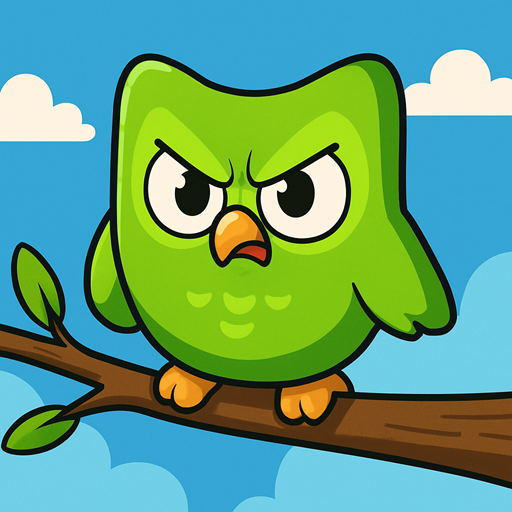
Case Study: How Duolingo’s TikTok Mascot Marketing Strategy Built a Brand That Small Businesses Can Actually Copy
By Cap Puckhaber, Founder of Black Diamond Marketing Solutions, Reno, Nevada
The Real Reason Duolingo’s TikTok Works (It’s Not What You Think)
I want to be honest with you. When I first stumbled onto Duolingo’s TikTok account, my instinct was to scroll past it. A green owl doing unhinged dances and fake-threatening people to practice Spanish felt like noise. But when I looked at the numbers behind it, something clicked. Duolingo grew from 40.5 million monthly active users in 2021 to over 116 million, and a big driver was a single dormant TikTok account handed to a 23-year-old recent hire named Zaria Parvez. That’s the story I want to pull apart for you, because there are real, repeatable tactics inside it.
What makes this case study worth studying isn’t the virality. Viral moments are accidents. What’s worth studying is the system underneath the chaos — the creative philosophy, the specific gamification mechanics, and the brand voice decisions that kept audiences coming back. Because those are things you can apply to a local business, a solo practice, or a service-based brand without a costume or a dance team.
Why the Original Approach Wasn’t Landing
The first version of Duolingo’s TikTok looked like most brand accounts. Polished clips, feature announcements, clean graphics. Nobody cared. The account sat dormant until Parvez asked if she could try something different. Her pitch was simple: let the owl act like a creator, not a company. What happened next became one of the most-studied social media turnarounds in recent marketing history.
The insight was not about humor. The insight was about permission. Parvez and her team stopped asking what the brand wanted to say and started asking what the audience was already talking about. As she put it to Adweek, “The comment section is our social brief.” That one shift changed everything.
What “Chaotic Brand Personality” Actually Means in Practice
This phrase gets thrown around a lot, but I want to define it in concrete terms. A chaotic brand personality is not random content. It is a deliberate decision to prioritize emotional authenticity over corporate control. Duo the Owl cries, flirts, overreacts, and makes fun of the brand itself. Because audiences can feel the difference between a brand performing relatable and a brand being relatable, Duolingo earned real trust.
The practical outcome is significant. Duolingo’s TikTok engagement rate runs around 11%, while the average for most brand accounts sits between 2% and 3%. That gap is not explained by budget or production quality. Most of their videos look like someone shot them on a phone in a hallway. The gap is explained entirely by voice.
The Three Rules Behind Duo’s Voice
When I advise clients on brand voice, I tell them to write down three things: what the brand will never say, what the brand always believes, and what the brand genuinely finds funny. Duolingo’s team clearly went through this exercise. Duo will never sound like a press release. It always believes learning should feel like entertainment and it finds the tension between accountability and failure hilarious.
Because of those three anchors, every piece of content they make passes a gut-check fast. Does this sound like Duo? If yes, post it. If not, kill it. That kind of clarity cuts production time and keeps the account feeling consistent even when the topics jump around wildly. Small businesses can do this exact exercise in about an hour, and it will change how fast you approve content.
The Mistake I See Brands Make With “Authenticity”
I worked with a local gym that wanted to copy Duolingo’s tone. They started posting memes about skipping leg day and sarcastic comments about pizza. Engagement went up for about three weeks. Then it flatlined. The problem was that none of the content connected back to something their audience actually cared about, which was showing up consistently and feeling proud of their progress. They borrowed the aesthetic without doing the underlying brand voice work first. Duolingo works because the chaos serves the product’s core promise. Every joke Duo makes loops back to the idea that missing your lesson has consequences. The humor is the reminder. Don’t skip that connection.
Gamification Is Not a Feature. It Is a Feeling.
People describe gamification as a marketing tactic, but I think that framing is too small. Gamification, when done right, is an emotional architecture. Research published in Marketing Dive describes the underlying mechanic clearly: reward specific behaviors with virtual items, then let those items unlock status or privileges. Duolingo’s streak system is the most famous example of this in consumer tech. But what Duolingo did on TikTok was extend that same emotional loop into social content.
When they post a video of Duo crying because a user missed a 365-day streak, they are doing something precise. They are making streak anxiety feel funny instead of frustrating. They are converting a potential churn moment into a piece of content that gets shared. Because that reframe is so clean and consistent, users start to feel like their in-app behavior is part of a bigger story they are living publicly. That is not an accident. That is gamification operating at the brand level, not just the product level.
How I Applied This With a Real Client
I worked with a fitness coach who had great retention for the first 60 days but a sharp drop-off after that. We built a simple milestone system inside her email sequences. Every 30 days, a subscriber got a custom badge image they could share on Instagram Stories. The badge referenced a specific behavior, like completing five workouts in a week or hitting a nutrition target three weeks running. Retention past the 60-day mark climbed 22% in four months. No new product. No discounts. Just a system that made progress feel visible and shareable.
The point is not that you need an app to do this. You need a mechanism that turns private behavior into a public identity marker. A punch card does this. A social media challenge does this. A “client of the month” post does this. The key is that the reward must be tied to a specific, repeatable behavior, not just to a purchase.
Applying Gamification Without a Tech Stack
A lot of small business owners hear “gamification” and assume it requires software, a developer, or a large budget. It doesn’t. I have seen a coffee shop run a 30-day check-in challenge on Instagram Stories with nothing but a shared hashtag and a handwritten certificate for the winner. That challenge generated over 400 posts from customers in a single month and brought in 18 new regulars who found the shop through tagged content. The mechanic was simple. Check in every day for 30 days and post with the hashtag. One winner got a year of free coffee. Total cost to the shop was about $600 in product.
The reason it worked is the same reason Duolingo’s streaks work. Streaks create identity. When you have checked in for 22 straight days, skipping day 23 feels like losing something that belongs to you. That emotional texture is exactly what keeps users inside an app and what keeps customers inside a business relationship. Build streaks into your retention strategy and watch your numbers change.
Short-Form Content Is a Craft, Not a Format
I want to push back on something I hear a lot: “Just post more Reels and TikToks.” Frequency without craft is just noise with a production schedule. Duolingo’s team understood something that most brand teams still get wrong. Short-form video is not a shorter version of your existing content. It is a completely different creative discipline with its own grammar.
The first two seconds of a TikTok video determine whether someone stays or scrolls. Because the algorithm rewards watch time and replays, Duolingo structures their content to create loops. The video ends in a way that makes you want to watch it again or immediately share it. They achieve this by building tension in the first second, delaying the punchline, and closing with something absurd enough to spark a comment. That is a specific, repeatable formula.
Building a Content System That Doesn’t Require Going Viral
Going viral is a nice outcome. Building a content system that delivers consistent impressions and engagement is the actual goal. Duolingo does not go viral every week. But because their posting cadence is high and their voice is consistent, their average video performs well enough to keep the algorithm feeding new viewers into their funnel. A useful resource for understanding what’s driving TikTok content performance right now is Marketing Brew’s analysis of Duolingo’s social strategy, which breaks down how their team balances speed with intentionality.
For small businesses, a realistic content system looks like this. Post three to five short videos per week. Two of them should be rooted in your brand’s core promise, one should respond to something trending in your niche, and one or two should be experimental. Track which experimental videos get replayed or shared, then build more content in that direction. Don’t chase what went viral for someone else. Chase what got replayed in your own feed.
The Production Trap That Kills Small Business Content
I have seen business owners spend $3,000 on a professional video shoot and get 200 views. Then they post a 40-second clip they filmed standing in their parking lot and it gets 14,000 views. The difference is almost never production quality. The difference is almost always energy, specificity, and timing. When I helped a SaaS startup pivot from polished explainers to raw, casual product walkthroughs filmed on a laptop webcam, their TikTok follower count doubled in 28 days. Raw outperforms polished because raw feels honest, and honesty is what TikTok’s audience has trained itself to find.
Building a Brand Community, Not Just a Following
Duolingo doesn’t just have followers. They have participants. Users create their own memes about Duo. They write comment threads that the brand account responds to. They post videos tagging Duolingo because they want the brand to see them. That level of participation is what separates a brand community from a content channel, and it is the most durable competitive moat a business can build.
The mechanism behind this is simple but often overlooked. Duolingo treats its comment section as content. When a user writes something funny, Duo responds in character. That response gets its own engagement, often bigger than the original post. Because each response is fast and in-voice, it signals to every other user that the brand is paying attention. Attention is a form of respect, and people return to places where they feel respected.
What Community Building Looks Like at the Small Business Level
I worked with a local outdoor gear shop whose owner had a habit of personally responding to every Instagram comment within 24 hours. Not with a generic “Thanks!” but with something specific, like referencing the trail in the photo or asking a follow-up question about their gear setup. Over eight months, their Instagram saved rate climbed 40%, and three of their most engaged followers became paying group-tour clients. None of that came from a paid campaign. All of it came from sustained, specific attention.
The lesson from Duolingo’s playbook is this: your community is not built by what you post. It is built by how you respond. Because responses are underrated and underinvested, they represent one of the highest-leverage activities available to a small business with a limited marketing budget. Audit your last 30 days of comments and see how many got a real, specific reply. That number will tell you a lot about the health of your community.
The SEO and Discovery Angle Most Brands Miss
There is a direct line between social engagement and organic search performance that most business owners don’t fully connect. When people discover your brand on TikTok and then search for it on Google, that branded search volume is a strong quality signal to Google’s ranking algorithm. Duolingo’s TikTok presence has driven enormous branded search volume, which has compounded their organic presence across the web. That compounding effect is part of why their content strategy generates business value well beyond the views on any individual video.
For your business, this means every piece of content that gets shared, saved, or linked back to your site is doing double duty. It builds social proof and it builds search equity. When I helped a local service business combine consistent short-form social content with SEO-optimized blog posts that answered the same questions their TikToks raised, their rankings for three competitive local keywords improved within 90 days. Social and search are not separate strategies. They are the same strategy told in different formats.
Linking Your Social Strategy to Your Site
The connection point between TikTok and your website is the bio link. But a bio link alone isn’t enough. The page it leads to has to continue the conversation that started in the video. If someone watched a 30-second clip about a common customer problem, they expect the landing page to go deeper on that problem, not redirect them to a generic homepage. Duolingo is smart about this. Their social content raises the emotional stakes around language learning, and the app experience immediately rewards the anxiety their TikToks create.
Build your own version of this loop. Short video raises a question. Bio link leads to a page that answers it. Page has a clear, low-friction next step. That loop, run consistently, compounds over time in both social and search performance. A deeper look at how social content interaction shapes brand recall and purchase intent is outlined in this research on gamification and consumer brand behavior from Frontiers in Communication, which is worth reading if you want the behavioral science underneath the strategy.
What I Would Do Differently if I Were Running This Account
Since I believe in being specific rather than vague, let me tell you exactly what I would change if I inherited a brand account struggling to get traction. First, I would stop trying to educate and start trying to entertain. Education is for your blog. Entertainment is for your short-form feed. Second, I would post every single day for 30 days, even if the videos were imperfect. Consistency builds algorithmic trust faster than sporadic quality. Third, I would spend 20 minutes every day inside my comment section and inside the comment sections of the five biggest competitors in my niche. The insights hiding in those comments are worth more than any content calendar software.
Because I’ve done this process with clients across retail, services, and SaaS, I can tell you that the businesses who gain traction fast are the ones who treat their social feed like a two-way conversation. They are not broadcasting. They are responding, participating, and building. That shift in posture is free. It requires no budget, no team, and no mascot. It just requires showing up consistently and giving your audience a reason to believe you are worth their attention.
Frequently Asked Questions
What made Duolingo’s TikTok strategy work when other brand accounts couldn’t replicate it?
The core difference was that Duolingo gave one person genuine creative autonomy and let the account behave like a creator rather than a corporation. Zaria Parvez used the comment section as her content brief, which meant every video was rooted in something the audience was already thinking about. Most brand accounts fail because multiple approval layers kill the timing and voice that make short-form content work.
How do small businesses apply gamification without building an app or spending a lot of money?
The simplest version is a streak or challenge mechanic tied to a specific, repeatable customer behavior. A check-in challenge on social media, a loyalty punch card that unlocks a public recognition, or a milestone email sequence with shareable badges all work without any tech investment. The mechanic only needs to make private progress feel visible and public.
What is a realistic engagement rate for a small business TikTok account?
Most brand accounts average between 2% and 3% engagement. A small business with a strong voice and consistent community responses can reasonably target 5% to 8% once the account has momentum. Duolingo sits around 11%, which is an outlier. The goal is not to match Duolingo. The goal is to outperform your own average each month.
How long does it take to see results from a personality-driven content strategy?
Based on what I’ve seen with clients, a consistent 30-day push usually produces measurable changes in engagement rate and follower growth. Meaningful impact on branded search volume and inbound leads typically shows up in 60 to 90 days. Consistency matters more than any single viral moment, because the algorithm rewards accounts that post regularly more than accounts that spike once.
Do you need a mascot or character to build a strong brand personality on TikTok?
No. The character is a shortcut to memorability, but it is not the only path. A strong human voice works just as well, and sometimes better, because authenticity is easier to feel from a real person than from a costume. The key requirement is that the voice is consistent, specific, and recognizable across every post. Audiences don’t need a character. They need to feel like they know who they’re talking to.
Can a B2B brand use the Duolingo approach, or is this only for consumer brands?
It works for B2B, but the translation requires adjusting the emotional stakes. Duolingo plays on the anxiety of failing to learn a language. A B2B brand might play on the anxiety of falling behind competitors, wasting ad spend, or missing a hiring window. The mechanics are the same. Find the tension your audience already feels, make content that acknowledges it honestly, and build a community around solving it together. Several B2B brands are doing this effectively on LinkedIn and YouTube right now.
If you haven’t read it yet, check out What is Going on with Advertising Budgets by Cap Puckhaber
Check out my latest blog on Apple’s Integration of ChatGPT by Cap Puckhaber
New on Black Diamond is my take on What Return-to-Office Means by Cap Puckhaber
About the Author
Cap Puckhaber is a marketing strategist, finance writer, and outdoor enthusiast. He writes across CapPuckhaber.com, TheHikingAdventures.com, SimpleFinanceBlog.com, and BlackDiamondMarketingSolutions.com. Follow him for honest, real-world advice backed by 20+ years of experience.
If you want to connect with Cap Puckhaber and see more of his insights on marketing, check out his LinkedIn profile where he shares regular updates and professional tips.
More blogs from Cap Puckhaber
- Explore my latest trail guides on my Hiking Blog
- Read my latest on business, side projects, and personal journey
- Master your personal finance with my investing guides
Follow Cap Puckhaber Online
Join the Team on Wellfound
Explore career opportunities and learn more about our company culture and current job openings.
Connect with Cap Puckhaber on Facebook
Get the latest company updates, marketing tips, and behind-the-scenes content on our official page.
See Real-Time Thoughts on X
For live insights, breaking industry news, and quick commentary on the world of digital marketing.
Join Cap Puckhaber’s Conversation on BlueSky
Engage with my profile and discussions on this growing decentralized social network.
Read In-Depth Articles on Medium
Explore my long-form posts covering marketing strategy, business growth, and emerging technology trends.
Subscribe to Cap Puckhaber’s Substack Newsletter
Get exclusive content, deep-dive analysis, and marketing insights delivered directly to your inbox.
Follow My Updates on Mastodon
Connect with me on the decentralized, open-source social media platform for unique updates.
Follow Cap Puckhaber’s Company Page on LinkedIn
Stay informed on our professional milestones, new services, and important industry-specific content.
View Our Agency Profile on DesignRush
See our agency’s verified portfolio, areas of expertise, and recent client reviews.
See Cap Puckhaber’s Agency on Agency Spotter
Find our detailed company profile and see how we stack up against other leading marketing agencies.
Explore Technical Projects on GitHub
For those interested in the technical side, you can dive into my code repositories and development work.
See Cap Puckhaber’s Creative Portfolio on Behance
Browse through a curated gallery of my design work, branding projects, and other visual creations.
Learn more about my company on Crunchbase
Check out more details on my company Black Diamond Marketing Solutions.
Leave a Reply
You must be logged in to post a comment.